Contributing to Canadian Culture
What Canadian culture means to me, and how I want to contribute to it.
I have been thinking a lot about Canadian Culture and the art movement that Tom Thomson and The Group of Seven started.
They wanted to capture the raw beauty of untouched nature. It is interesting that the land that they were painting on is the oldest land on earth.
In my opinion many of Thomson's paintings explored the idea of physical objects staying strong and unmovable against strong forces. The West Wind by Thomson is an example of this. Canadians are very much unmovable against forces against them.
They wanted to create a new and identifbly Canadian art movement that wasn't reliant on Europe for it stylistic endeavors.
Are we seeing this today? Yes. To take a modern example in music; Drake created the Toronto sound. It is distinct in it's sound. The Tragically Hip are another example where they wrote and created music about Canadian stories.
One of the reasons why I paint, and I decided this when I first started, is that I want to contribute in some way to Canadian culture through my art and writing.
Movies and Literature
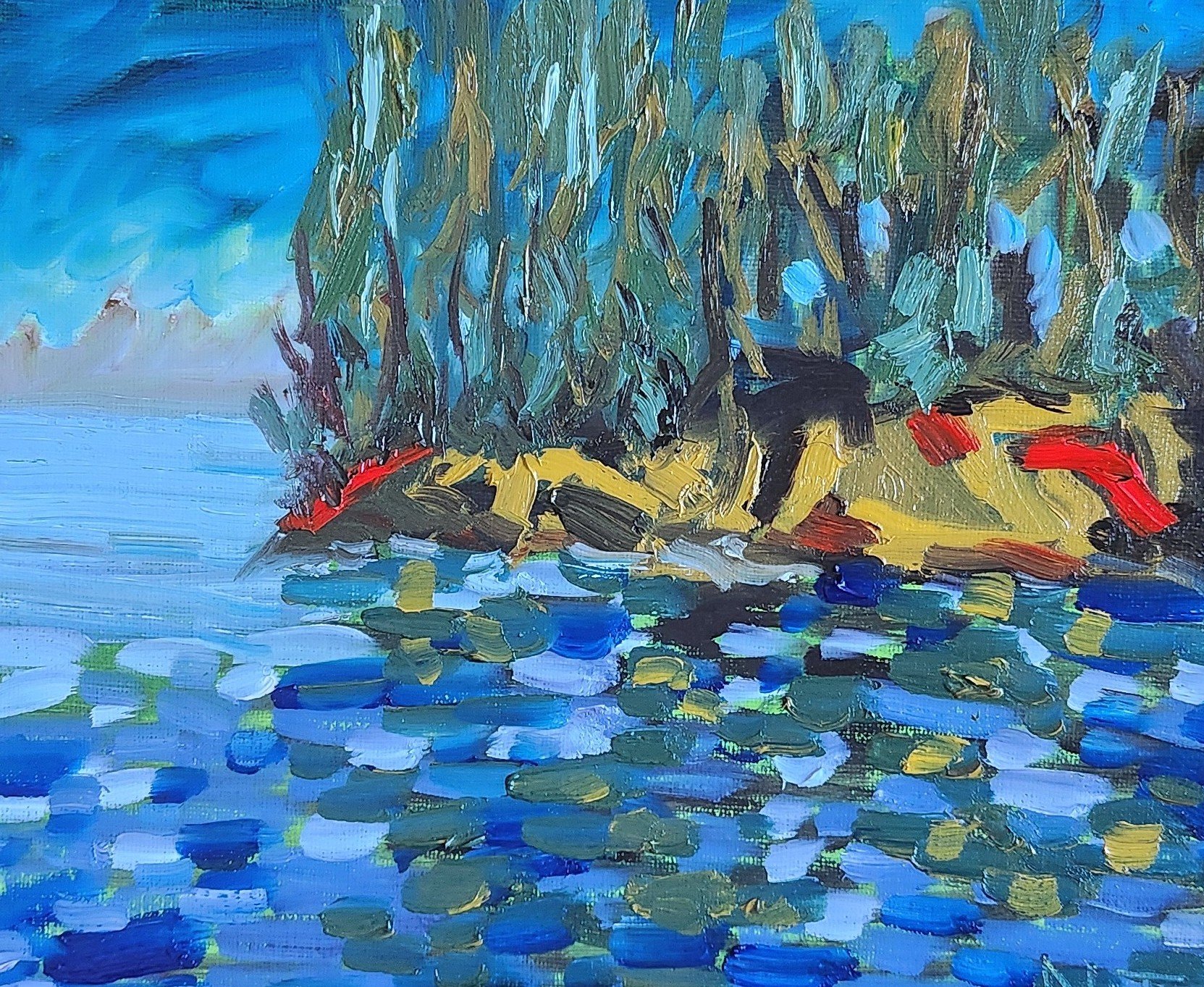
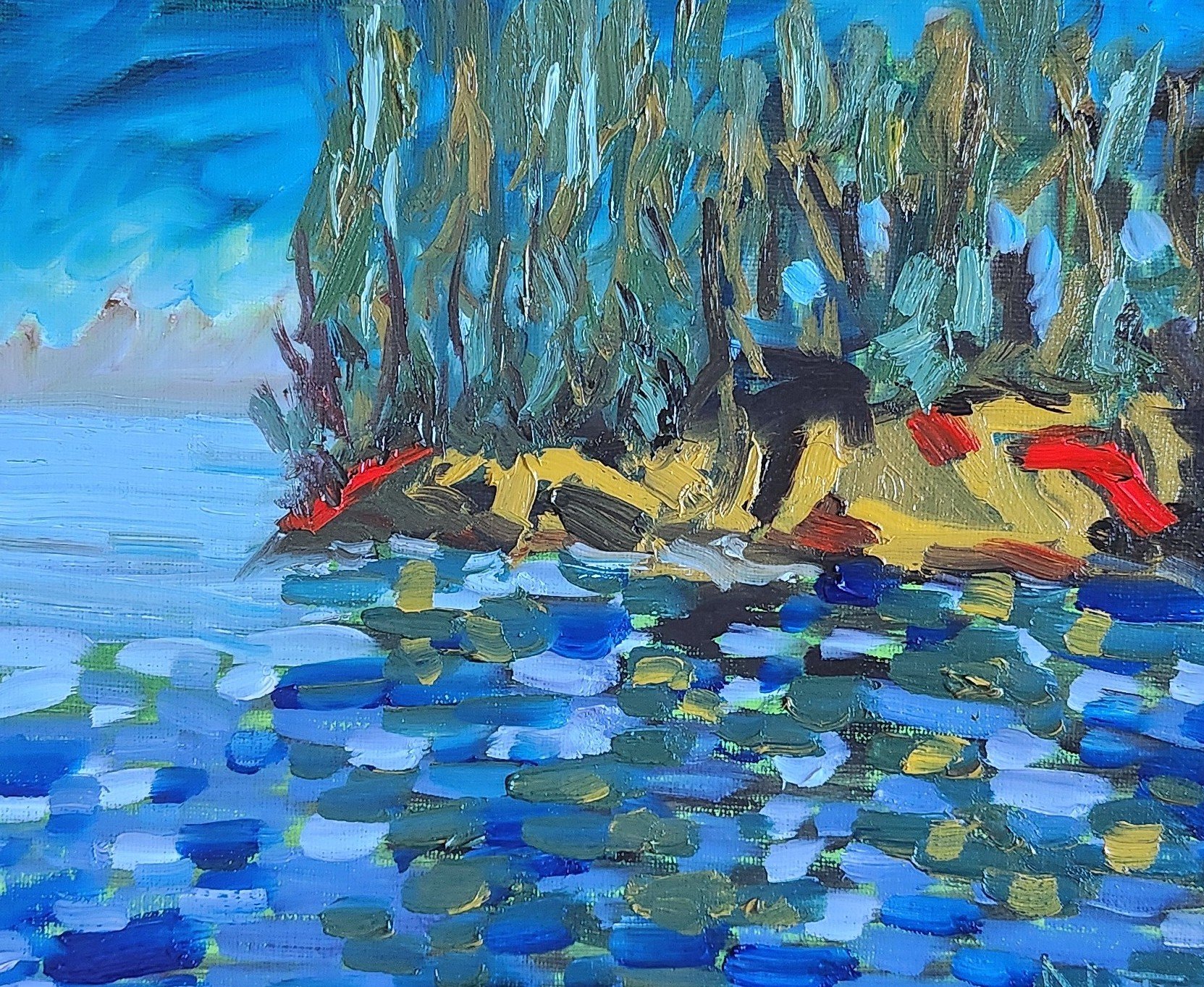
This painting is titled Island Echoes. It is a scene from the Lake of the Woods.
Troy-an ancient civilization destroyed because of one man's pride, hubris, and greed.
Odysseus-a warrior, leader, king, father, and husband. Makes a decision that sends him to the furthest reaches of the world only to realize that what he needs and loves the most is worth more then a kingdom.
I had the pleasure of seeing Christopher Nolan's adaptation of The Odyssey. My first interaction with this epic poem from Homer was when I was still in highschool where I read it because I was curious. My mind was mesmerized by the use of language as the translation I read was a direct word for word translation from the ancient Greek to english. Later on at the University of Winnipeg I wanted to further my knowledge so I took a Greek Literature course.
The current film adaptation was just as important and ethereal for me. Nolan's use of archetypal imagery, and the way he made the film relevant to todays world and events was impactful.
In my opinion anyone who cares about today's state of the world and wants to make it a better place needs to know this literature, not have an academic understanding of it but know what it is and the meaning behind it.
Insights into Oil Painting
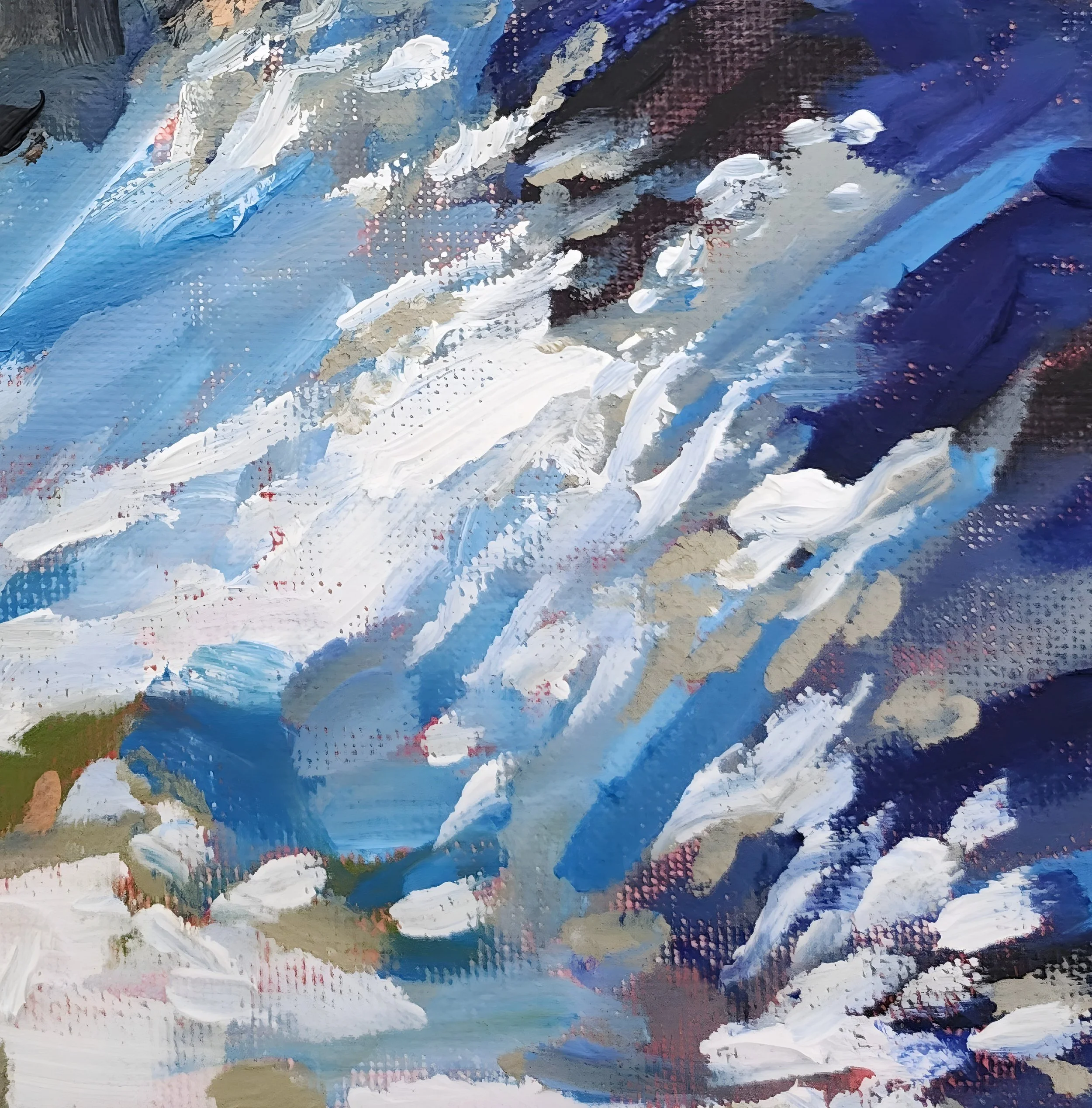
Oil painting is about observing what you see and feel. Colours, and darkness or lightness of colours can represent the mood you felt while painting. Or it can be the feeling you want others to experience while they look at your painting.
Learning to paint with oils is less about mastering everything at once and more about building a patient relationship with paint, colour, and observation. At first, oil painting can feel intimidating. The materials seem serious, the drying time is slow, and every brushstroke feels important. But that slowness is also part of its beauty.
The process begins with a simple practice: learning how paint moves, how colours mix, and how light changes the feeling of a subject. A beginner does not need to create a perfect painting. Instead, each canvas becomes a quiet lesson. One painting may teach value. Another may teach edges. Another may reveal how warm and cool colours can make a landscape feel alive.
Oil painting also teaches patience. Because the paint stays workable, there is time to adjust, scrape back, soften, or build texture. Mistakes are not failures; they are part of the conversation between the artist and the surface.
Over time, the painter begins to see differently. Trees become shapes. Shadows become colour. A lake becomes movement, reflection, and atmosphere. Learning oils is really learning how to see in a new way.
With each painting, confidence grows. The goal is not perfection, but presence: showing up, experimenting, and slowly discovering a personal way of seeing the world through paint and your own artistic expression.
Beginner Oil Painting Guide
This blog post is about a free beginner oil painting guide that I have created for people to use.
Learning how to oil paint can feel like it is complicated. If you're like me and live in a location that is far away from everything it can be difficult to ask questions with someone one-on-one. To help other people with this process I have created a Beginner Oil Painting guide. It is free. To access the free guide simply go to the link in menu on the top right corner.
No payment is required or needed. However, if you would like to Buy Me a Coffee you can do so using this link.
https://buymeacoffee.com/neiltworek
Finding beauty in quiet Canadian landscapes
In this post I discuss how the quiet moments inspire my art.
I consider myself very lucky to be living in the boreal forest around Kenora and Lake of the Woods. Living here has quietly shaped the way I see the world.
When you spend time here, you begin to notice things that are easy to miss at first. The shifting reflections on water. The subtle blues and greys in granite rock. The way a stand of evergreen moves gently in the wind.
These moments are simple, but they carry a kind of quiet power.
When I paint, I’m not trying to recreate a photograph of the landscape. Instead, I try to capture the feeling of being there. The stillness of a calm morning. The energy of trees reaching toward the sky. The soft light of evening settling over the forest.
Many of my paintings begin with time spent walking, observing, and simply being present in nature. From there, the painting becomes a personal interpretation of those experiences.
Canadian painters like Tom Thomson and the Group of Seven understood that the wilderness of this country holds something deeply meaningful. Their work showed that landscapes can be both powerful and peaceful at the same time.
My hope is that when someone sees one of my paintings, it carries a small piece of that feeling with it — a reminder of quiet places, open skies, and the beauty of the boreal forest.
Why the Boreal Forest Inspires My Canadian Landscape Oil Paintings
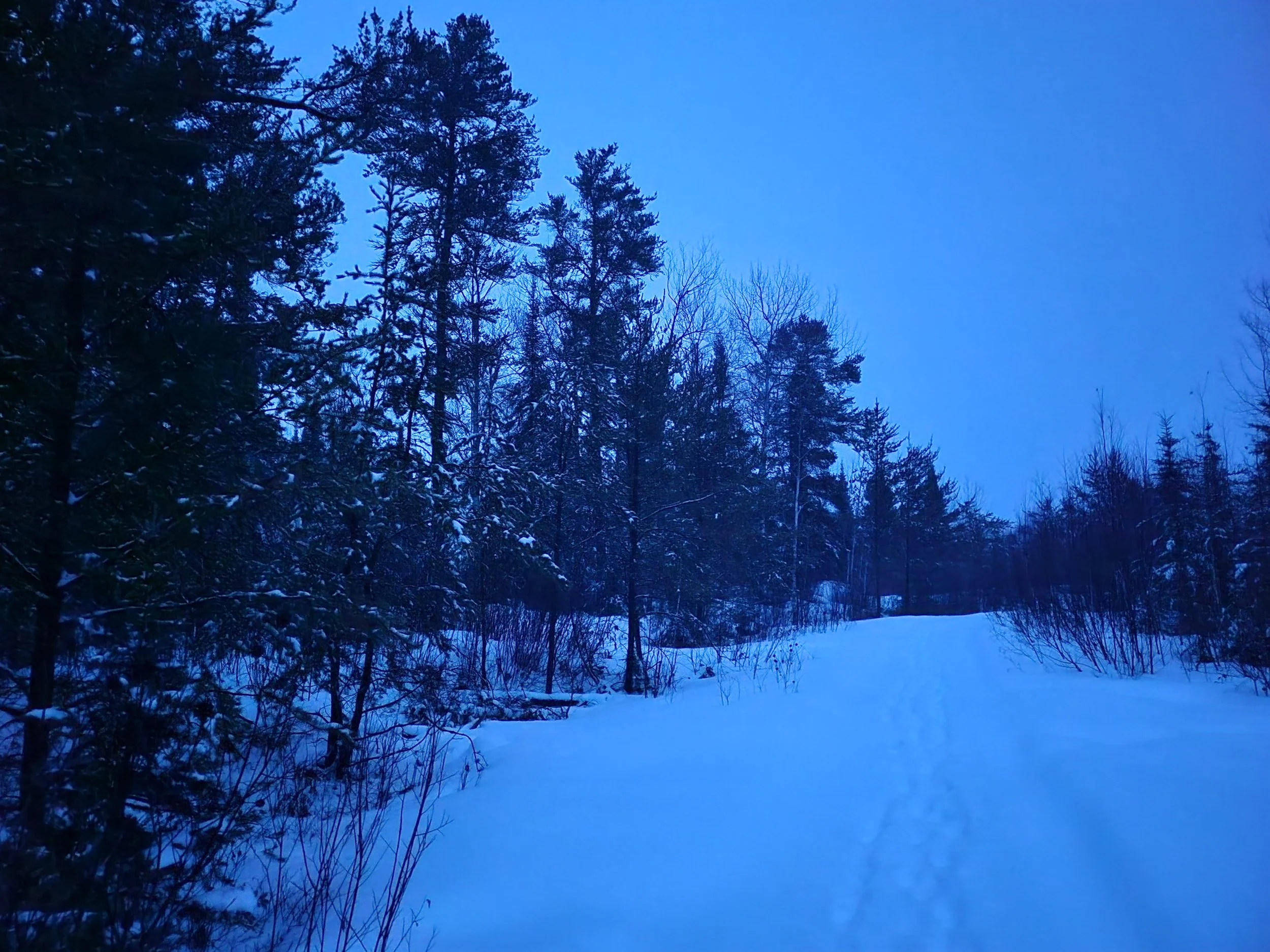
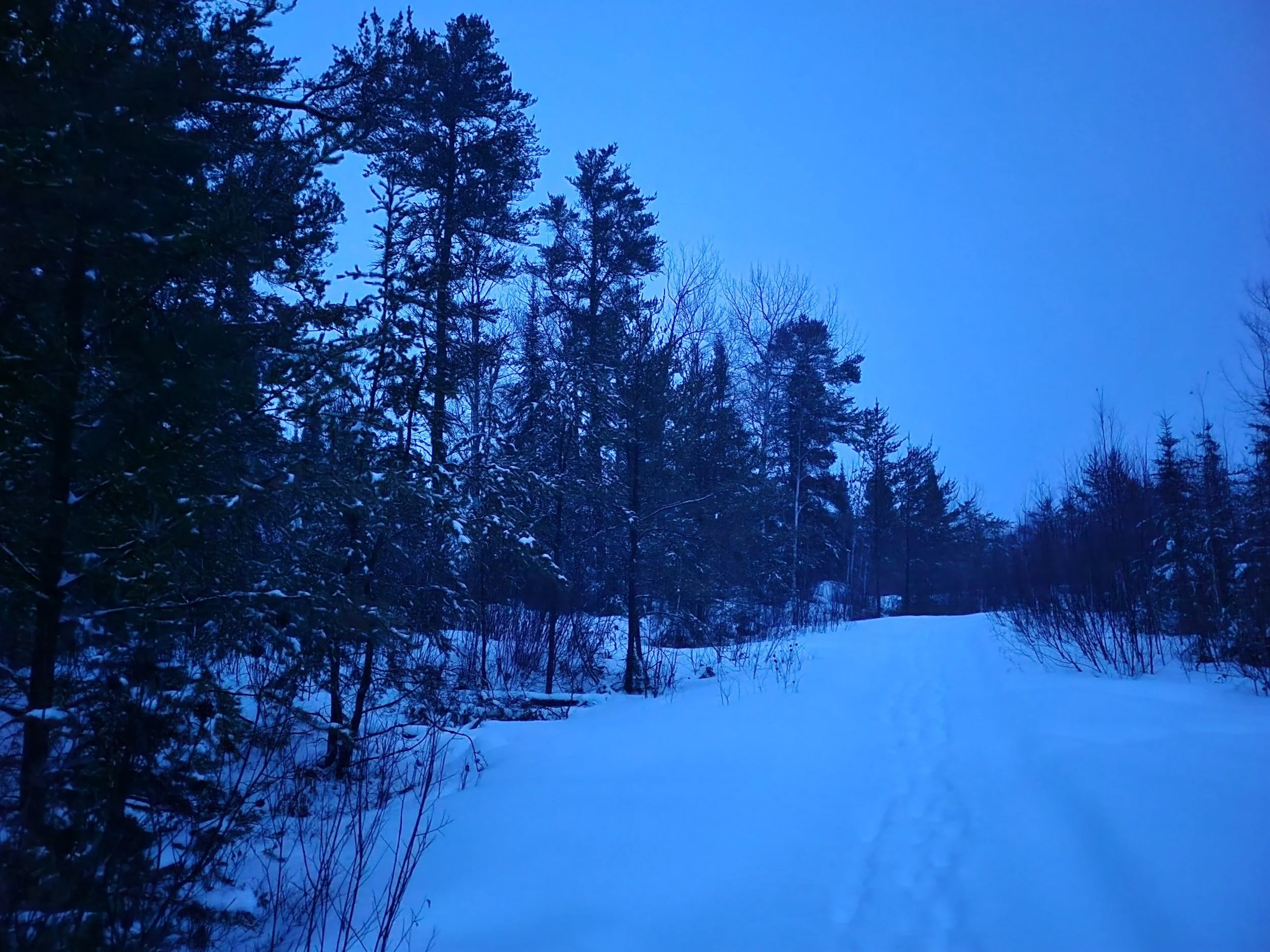
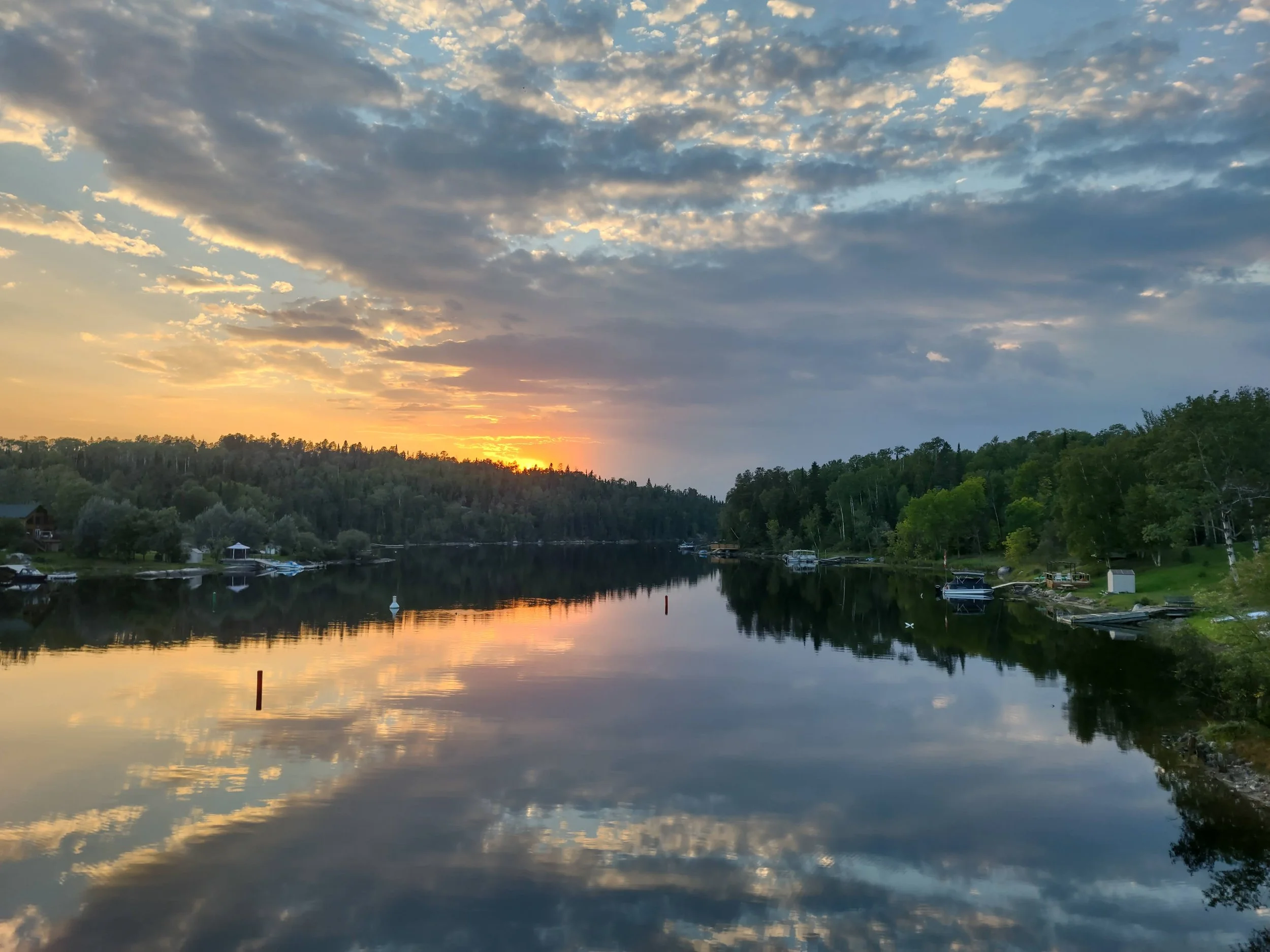
This is where my family and I live in the boreal forest.
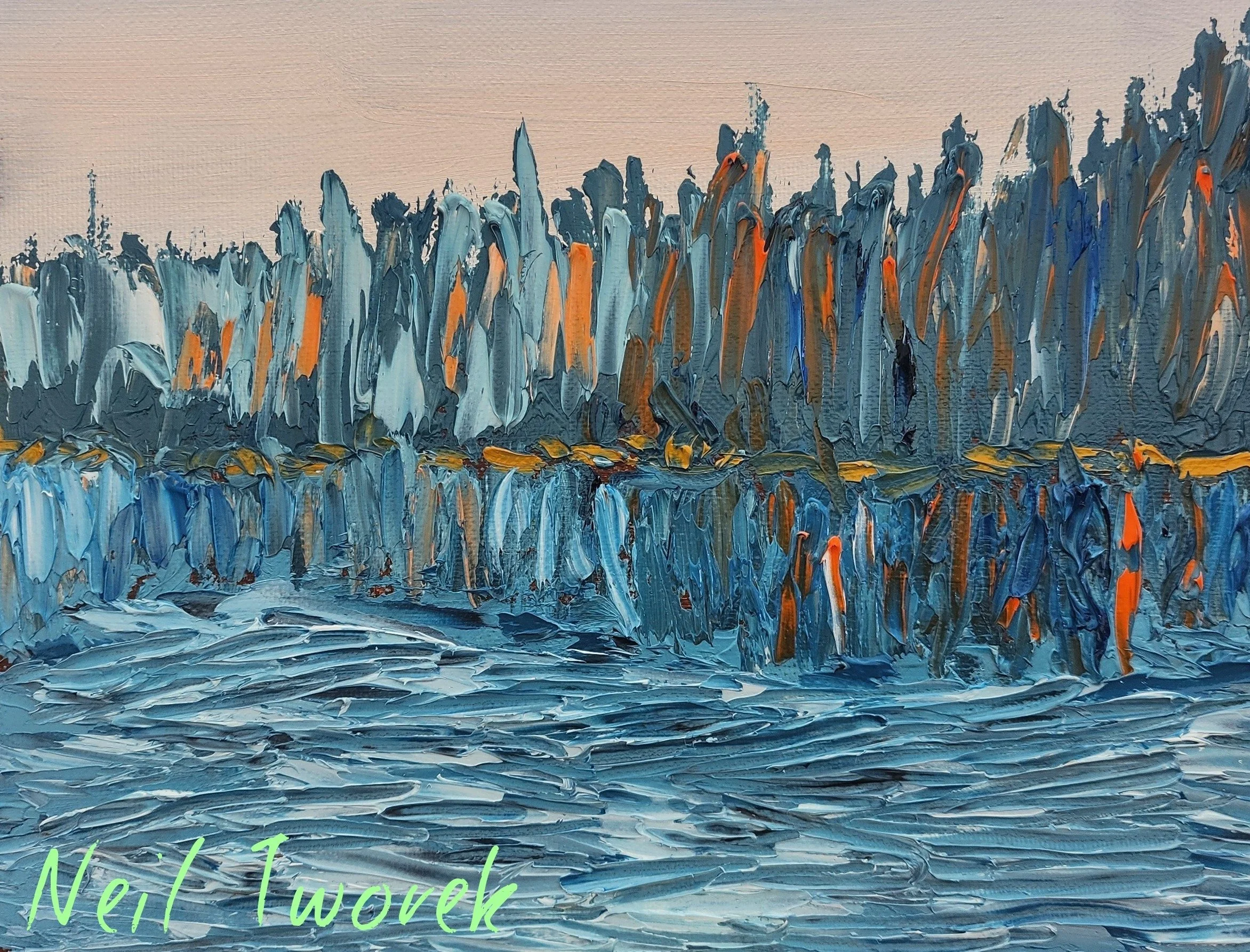
Living near Kenora in Northwestern Ontario means being surrounded by the quiet beauty of the boreal forest. This landscape has become the heart of my work as a Canadian landscape oil painter. The forests, lakes, and granite of the Canadian Shield hold a kind of energy that I try to capture through abstract impressionism.
When I walk the trails near my home, I’m not just looking for scenery. I’m paying attention to subtle things — the sound of wind moving through pine trees, the reflection of sky across still water, or the calm that settles over the forest at dusk. These small moments shape how I approach painting and help guide my brush.
My work is influenced by Canadian painters like Tom Thomson and the Group of Seven, who believed the wilderness itself was worthy of deep artistic exploration. Their paintings celebrated the raw beauty and spirit of the Canadian landscape, and that tradition continues to inspire my own creative process.
Through loose brushwork, layered colour, and expressive movement, I try to paint not only what the landscape looks like, but what it feels like to stand within it. Each painting becomes a way of sharing that quiet connection with nature.
If you’re interested in original Canadian landscape oil paintings inspired by the boreal forest, you can explore my current work in the gallery section of this website.
Slowness as Rebellion in Modern Life: The Oil Painter’s Quiet Resistance
In this blog post I discuss the importance of slowness in my artistic process.
In a culture driven by speed, productivity, and endless scrolling, choosing slowness becomes a radical act. For the oil painter, this is not a limitation—it is a powerful advantage. For me the slow drying time of oil paint invites patience, reflection, and intentionality, making it the perfect medium for me because I seek a deeper, more mindful creative process.
The concept of slowness in oil painting allows ideas to evolve naturally. Each layer, brushstroke, and adjustment becomes part of a dialogue rather than a race to completion. The deliberate pace fosters artistic growth and helps me develop a stronger connection to the work. In a world obsessed with instant results, embracing slow art techniques is a form of creative rebellion for me.
As an Artist I am constantly searching for ways to improve my oil painting skills this often overlooks the importance of time. Yet, learning to pause, observe, and respond is essential for creating meaningful, expressive artwork. Whether I am working on landscape painting, still life, or abstract compositions, slowing down enhances my technique and vision.
If you are looking to deepen your creative practice, consider how slowness can transform your approach. Through mindful oil painting and intentional artistry, you can rediscover the joy of creating without urgency—finding beauty in the quiet moments where true expression lives.
Energy in the landscape — metaphor or reality?
Whenever I talk to people about my oil painting practice and my artwork I often talk about the energy that I experience from my subject; for me rocks, trees, and water carry intention. At first glance, this language sounds metaphorical, a poetic way to describe light, movement, and mood. Wind bends grasses, clouds race, water reflects the sky—these are observable forces, measurable and real. Trees and rocks will form to the flows of these energies.
What we call energy might be our sensitivity to change, contrast, and rhythm.
Yet there is another way to consider it. Human perception is not passive; it is embodied. When we stand before a vast lake or a dark forest, our nervous system responds. Heart rate shifts, attention sharpens, memories surface. The landscape seems to act upon us, not just visually but physically. In that sense, energy is not only out there, but between us and the world. It's like that vibe we get when we are interacting with a person, but in this case it is nature itself.
For me I will translate this exchange into shapes and marks on the canvas. Edges soften or sharpen, values compress or expand, colours vibrate or quiet. A storm can be rendered with broken strokes; stillness with broad, unified planes. These choices are not arbitrary. They arise from my own felt experience.
So, is energy a metaphor or a reality? Perhaps it is both: a measurable set of forces and a lived encounter that exceeds measurement. The landscape holds motion and structure; we bring awareness and meaning. Where they meet, energy becomes visible.
Creating amongst solitude
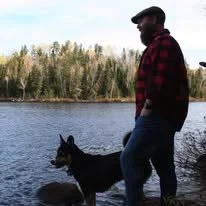
The dog and I at one of my favourite spots in the Lake of the Woods area in Northwestern Ontario, Canada.
Solitude is often misunderstood as emptiness, but for me it is a quiet workshop for the spirit. In the absence of constant noise and distraction, something subtle begins to surface. Thoughts deepen. Sensations sharpen. The world feels closer and more mysterious at the same time. Shapes and colour become sharper and more focused.
Creating amidst solitude allows my mind to wander through landscapes that are easily drowned out by the rhythms of everyday life. A simple sound—the wind through pine needles, water touching stone, the distant call of a loon—can open a doorway to inspiration. In these moments, art becomes less about producing something and more about listening.
There is a kind of conversation that happens in solitude. I will often sit with a blank page, a blank canvas, and slowly something begins to speak back. Shapes emerge. Colours find their place. Words arrive quietly, as if they had been waiting for silence to make themselves known.
Solitude can also invite honesty. Without the immediate presence of an audience, creation becomes more intimate and sincere. My work reflects inner landscapes and feelings rather than expectations.
In a world that often celebrates constant connection, for me solitude remains a sacred creative space. Within its stillness, imagination breathes freely, and art grows from the quiet places of the body, mind, and spirit.
How Nature’s Mystery Inspires Me
The natural world has never felt silent to me. It hums with an intelligence older than language, older than the first stories whispered around firelight. When I walk in the boreal forest or stand beneath a sky stretched wide with stars, I sense something just beyond my comprehension — a depth that refuses to be fully named. It is this mystery that moves me to create.
As a young child I grew up spending time at the family cottage playing in the water, fishing for my dinner, and canoeing around the lake. I still live a life that is surrounded by nature. This lake is a place that is important to my family and me, and I still go there. It holds a deep mystery to its creation as it was carved out ny.glacial tides thousands of years ago and has no streams or rivers feeding into the lake.
Nature does not need to explain itself. A stone holds the memory of pressure and time. Of other peoples’ stories of their time spent there. Water reflects light yet conceals its own dark interior. Wind shapes trees without ever being seen. In their quiet presence, these elements suggest truths without defining them. They invite contemplation rather than conclusion. When I walk in the forest I will often stop to listen and observe.
My work grows from that invitation. I am less interested in replicating landscapes in oil paint than in translating the feeling of standing within them — the stillness before a storm, the hush of snow, the shimmer of sunlight across ripples of water. These moments feel sacred not because they are dramatic, but because they are vast and subtle at once. It is often said that the quieter one's voice is, the more important is their message.
Mystery makes my oil paintings come alive. If nature were fully explainable, creation would feel mechanical. Instead, each piece becomes a dialogue with the unknown — a gesture toward something infinite, expressed through texture, light, and silence.
Art is a Language Older than Words
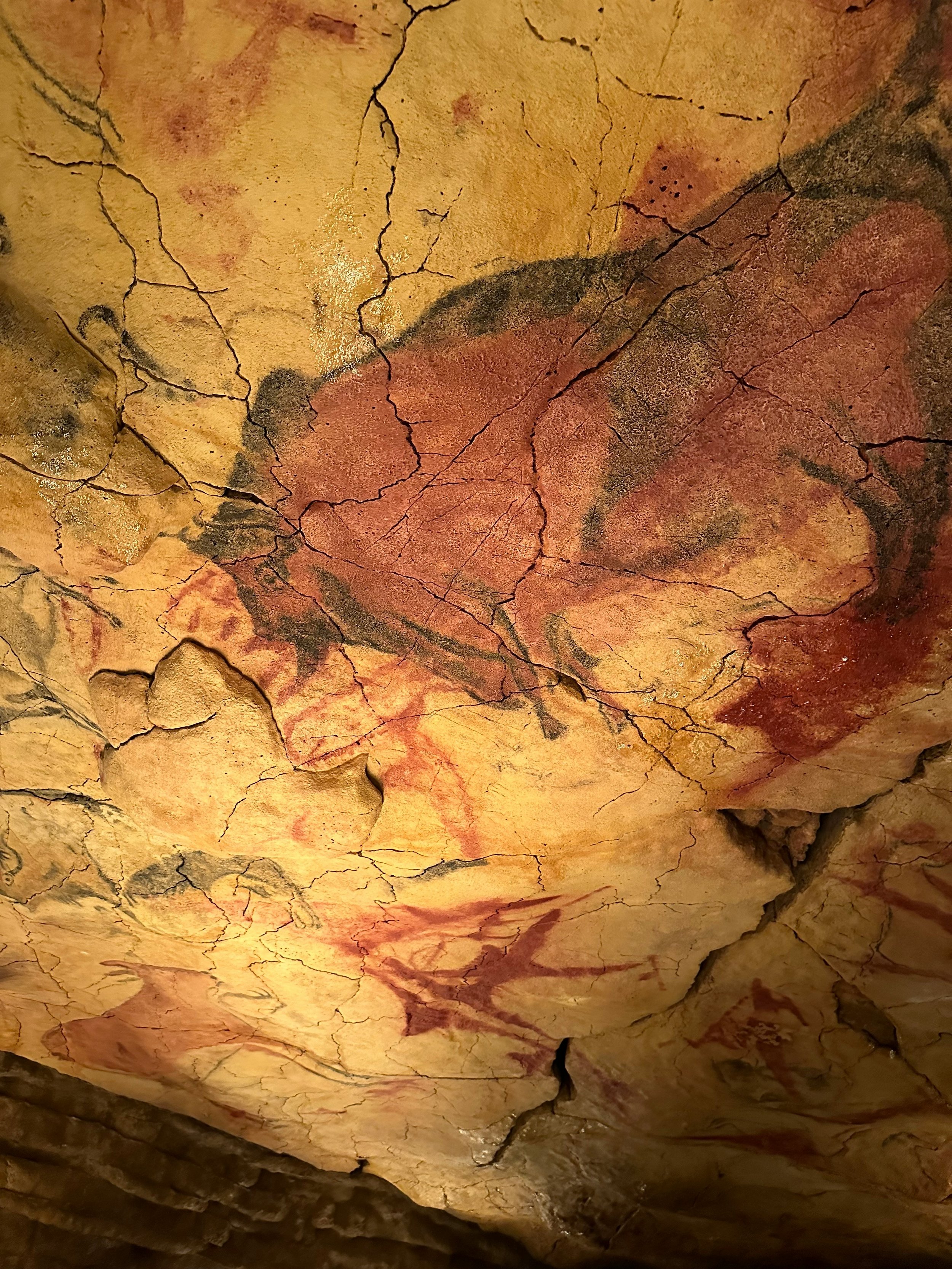
Long before symbols were cut into stone or ink put onto parchment paper, human hands entered the hush of caverns and pressed their knowledge onto rock. In the trembling light of animal-fat flames, figures stirred to life — bison in motion, horses mid-stride, canoes gliding across water, hunters, warriors, signs whose meanings are just beyond our recall. In places such as Lascaux Cave and Altamira Cave, the walls became canvases.
Here in Canada, along granite Canadian shield rock and quiet waterways, ancient travelers left ochre signs for those who would follow — markings not of ownership, but of guidance. Safe passage. Memory. Presence. Art was never mere ornament; it was invocation. It was a map and prayer, story and identity braided into stone. It still is.
Even our cousins, Homo neanderthalensis, entered this current. In Cueva de Ardales, red ochre on cave formations whisper of symbolic longing. Before grammar, before scripture or city walls, there was the gesture — the quiet declaration: I am here. Small handprints of Neanderthals, child-sized, reach across the millennia. This matters.
The impulse has never faded. It moves through oil paint and muraled walls, through dance, film, poetry, and digital pictures. Oil paint itself — earth ground to dust, and mixed with linseed oil — is humble mud made luminous. We create not from convenience, but from necessity. Art remains our oldest tongue, a bridge between inner and outer worlds, between one consciousness and another.
Before we spoke in sentences, we spoke in image.
And somewhere beneath our words, we still do.
Experiencing nature through feeling
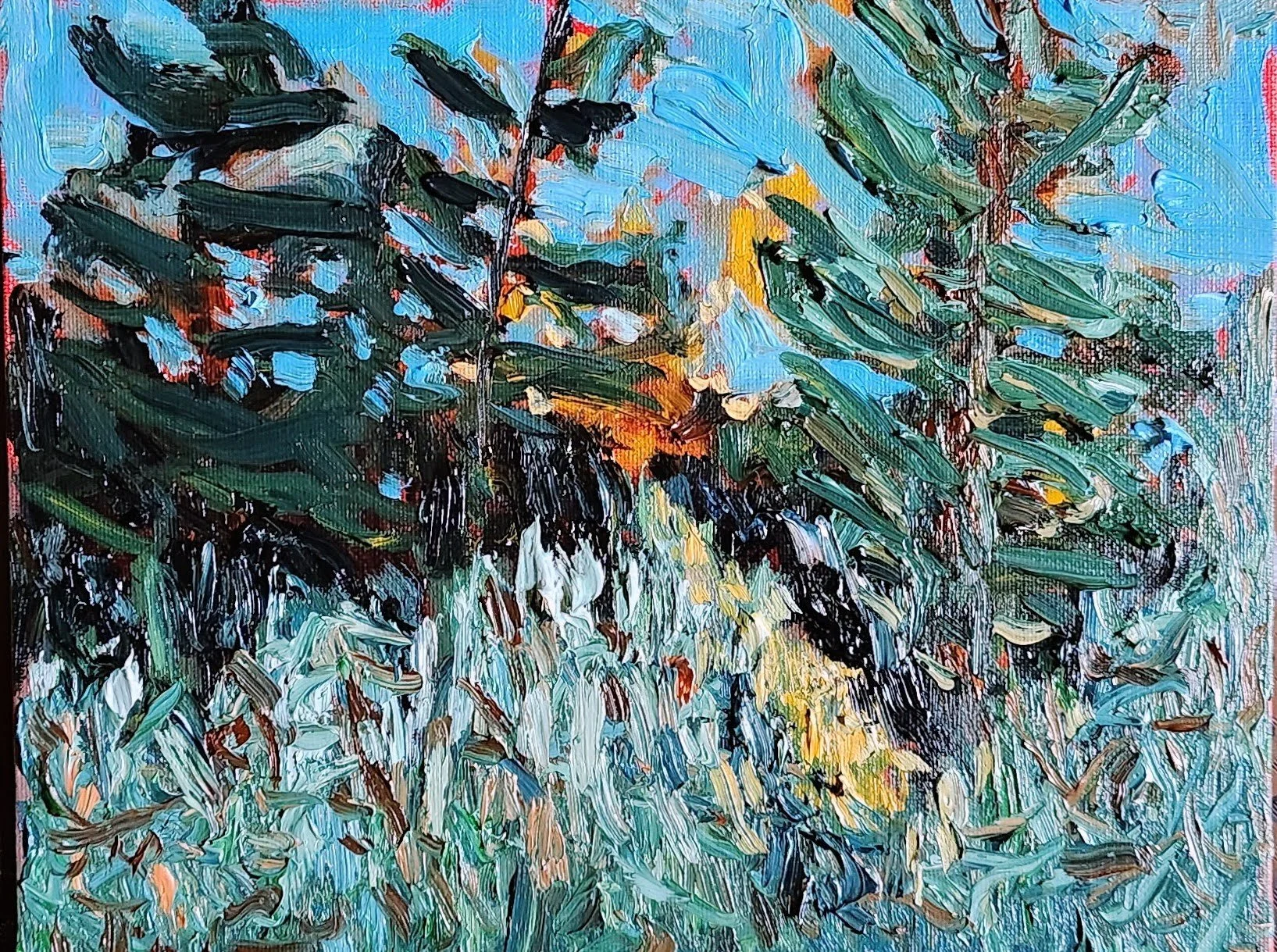
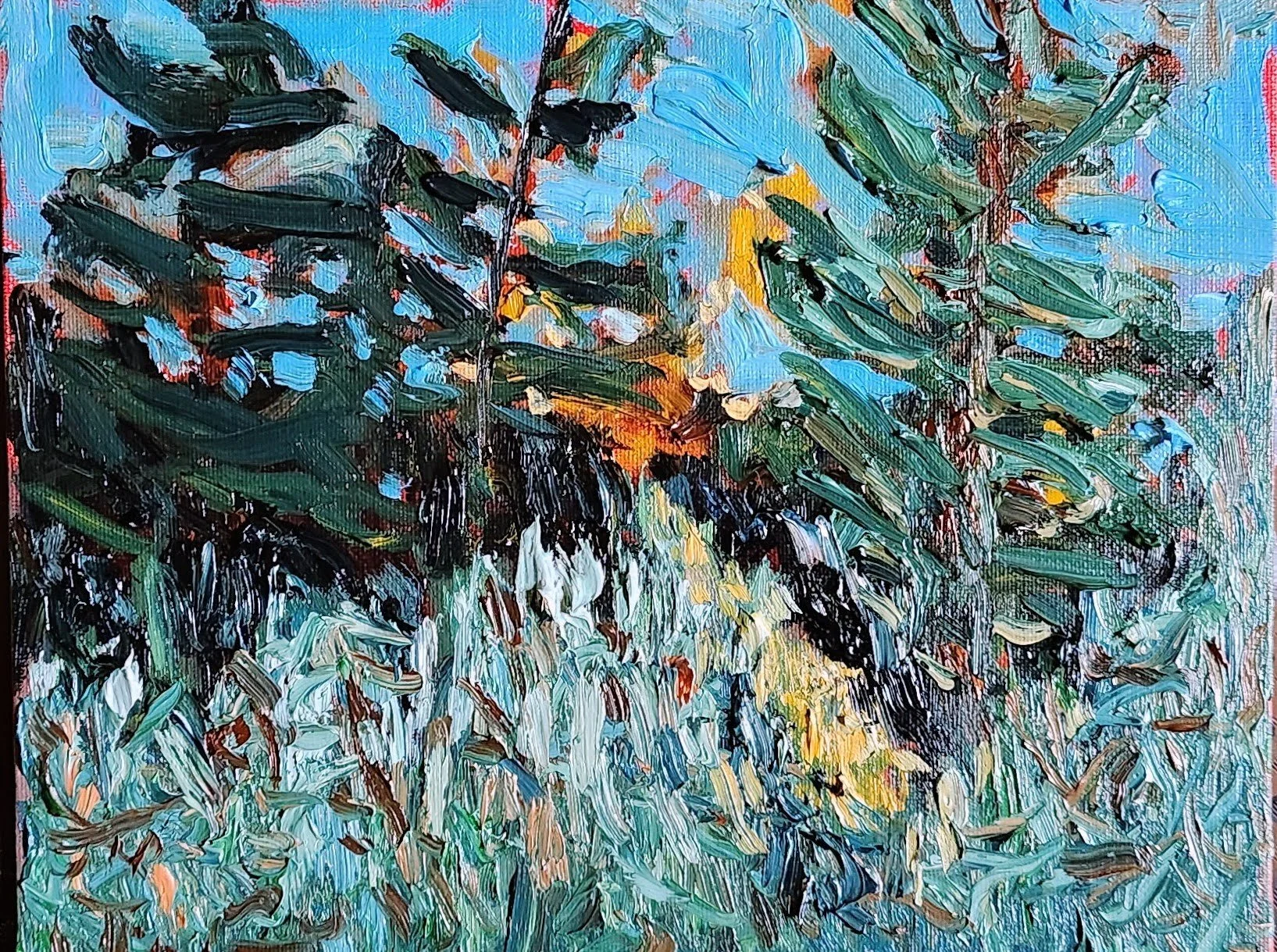
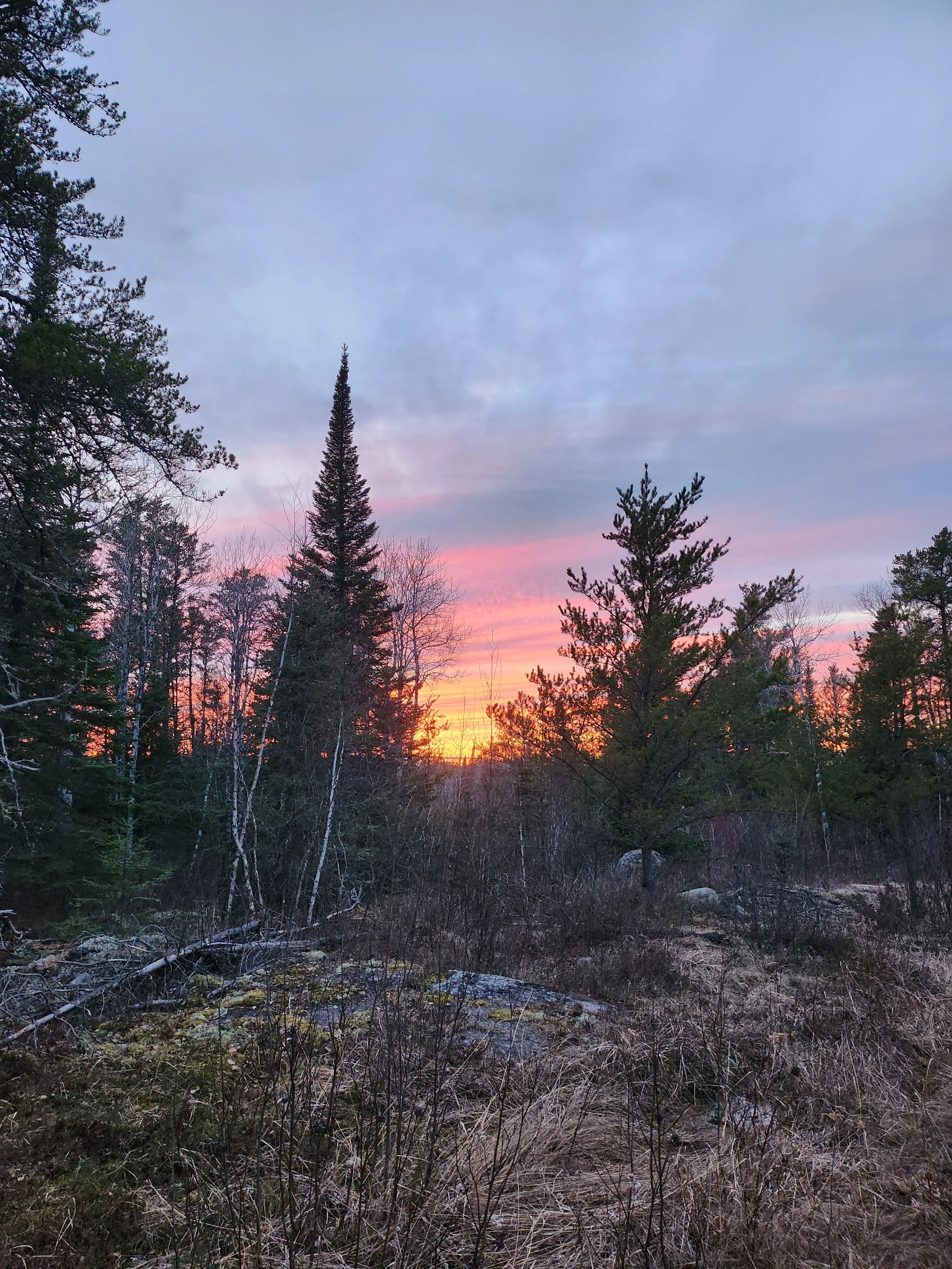
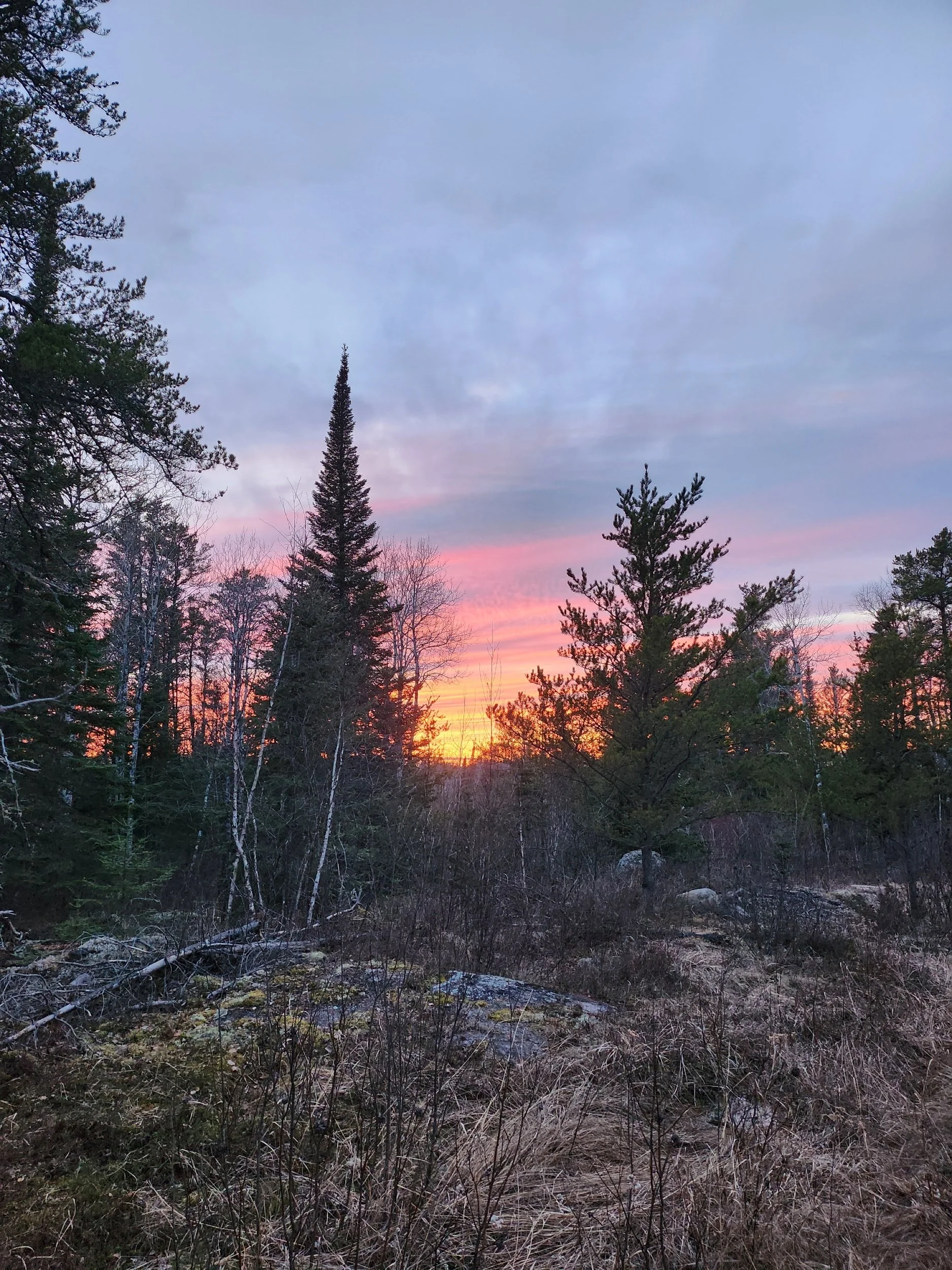
Sunset in the Canadian Boreal Forest in Northwestern Ontario.
Taken by Neil Tworek
The natural world has never felt passive to me; it moves with a presence that is quietly alive. When I walk beneath a wide northern sky, pause to listen to the subtle language of the land, or stand at the edge of a still lake within the boreal forest, something stirs within me — at times a hushed awe, at times a restless current, at others a profound and steady stillness.
These impressions do not dissolve when the moment passes. They travel with me. They follow me home, settle into the quiet of the studio, and re-emerge through colour and texture. My oil paintings begin in this way — not as images observed, but as sensations seeking form. I always paint the scene in my mind before I put paint to canvas. Often the land itself will communicate to me how it wants to be portrayed. For me I do this through listening to what the rocks, trees, air, and water are telling me.
Impressionism in oil painting in my opinion, is not an act of replication, but of attunement. In the act of painting, I set aside analysis and allow instinct to guide the gesture. The brush moves swiftly when the wind feels sharp; the palette knife presses and drags when the landscape hums with something raw or electric. I try to remain faithful to that first resonance, trusting that immediacy carries a deeper truth than careful precision ever could.
My hope is simple: that when someone stands before the work, they do not merely see a landscape — they feel it. That they sense the wind, the light, the quiet presence within it, and in doing so, remember their own moments of communion with the seen and unseen world.
The sacred ordinary: finding divinity in lakes and stone
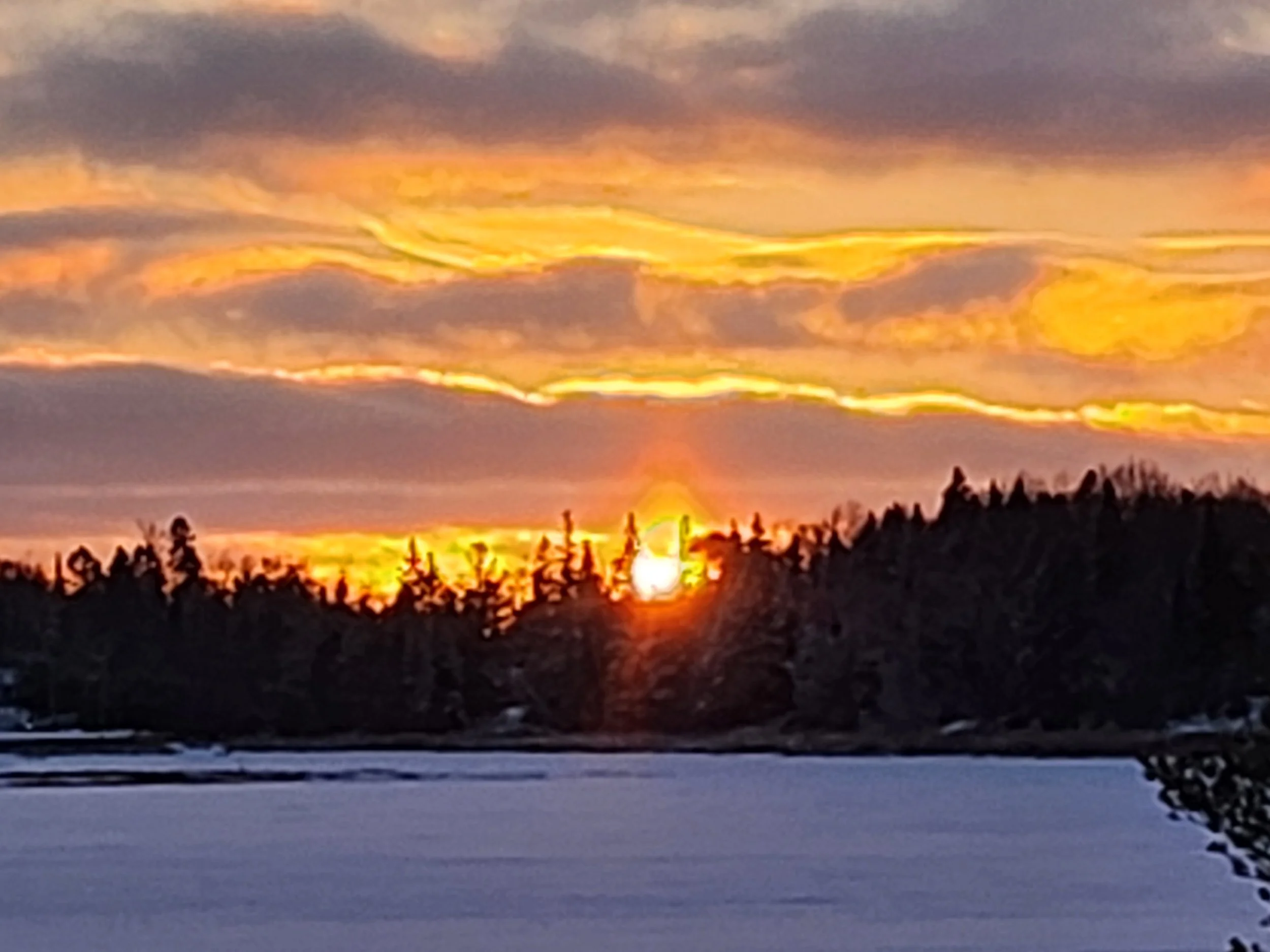
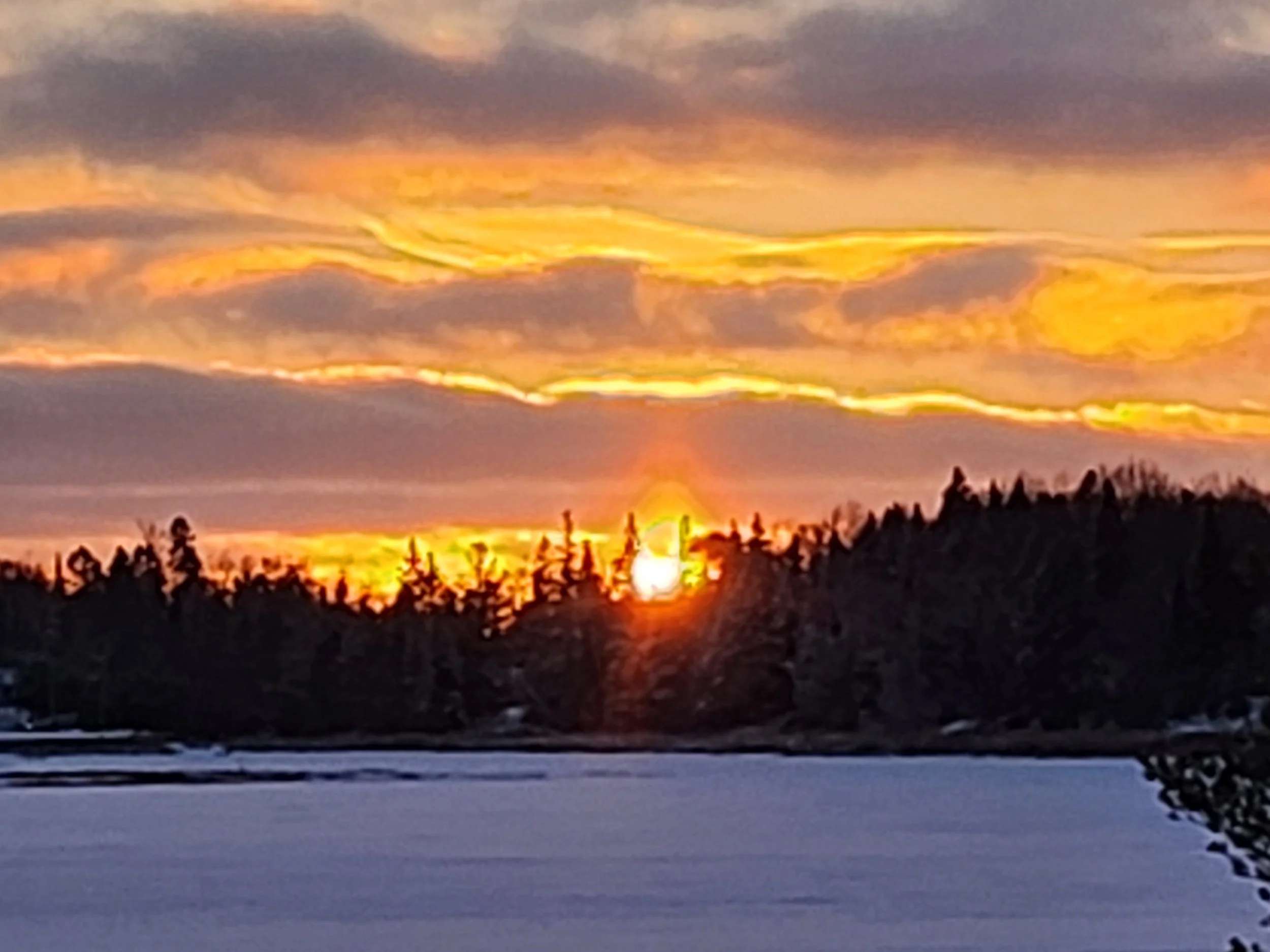
Sunset on Lake of the Woods in the winter.
Photo by Neil Tworek
There are moments when the world does not arrive in thunder or revelation, but as a hush — a softness that gathers at the edges of perception. A lake before sunrise. A stone holding the warmth of the afternoon sun. The sacred rarely insists upon spectacle; more often, it lingers quietly within what we call ordinary. In my oil paintings I find that this is often the same; standing in a place and feeling the sacredness in the scene and putting paint onto canvas in hopes of capturing just that.
At the edge of a lake, I have felt the simplicity of the moment. Water meeting rock. Light dissolves into shadow. Nothing extraordinary, and yet everything is alive. In such moments, divinity does not descend from above; it rises gently from within the fabric of things — exhaled through wind, cradled in granite, trembling in reflected sky. The lake becomes a mirror not only of passing clouds, but of the vast interior sky of the soul. Colour, hue, and value speak through the paint and brush to give representation to these moments.
Stone, too, speaks in silence. Born of pressure and deep time, shaped by patience beyond imagination, it embodies a slow and faithful endurance. To cradle a stone is to touch the memory of the earth itself. It does not strive. It does not proclaim. It simply is. No matter how hard granite is, it can be cracked open by ice, frost, and water. I allow my observations of the forms that nature takes to be expressed through the palette knife and paint brush in hopes of capturing this raw and ancient power.
The sacred ordinary is not an escape from the world, but a deeper entering into it. It is the recognition that transcendence is braided into texture, temperature, and colour. When we soften our gaze, lakes become quiet altars, stones become ancient teachers, and we remember — gently — that the divine is always there. My hope is that I can express this through my oil paintings through colour, texture, and the emotions that I am feeling at the moment.
Art in my life
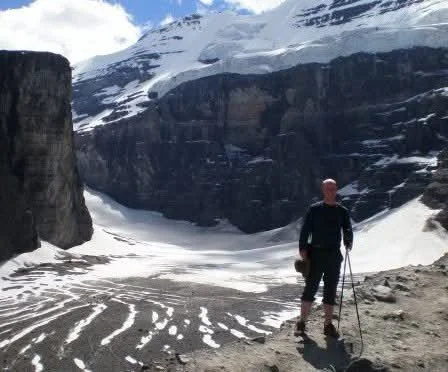
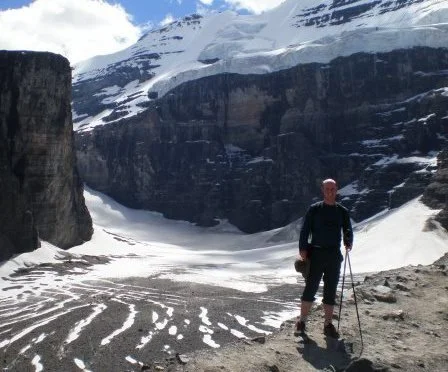
Lake Louise Alberta, Canada.
I began falling in love with art long before I had the language to explain it. As a child, I would wander through our home, which felt more like a quiet gallery than a house. My maternal grandfather collected carvings and paintings created by First Nations artists from across Manitoba — each piece carrying story, memory, and spirit. Even then, something in me recognized that art was more than decoration. Colour and texture spoke in a language deeper than words.
Growing up in Canada, I eventually encountered the work of the Group of Seven and Tom Thomson. Their paintings did not merely depict the land — they revealed it. Windswept pines bending like prayer, skies alive with movement, rock and water humming with presence. They showed me that landscape could be a living force, and that paint could become a vessel for its spirit.
Years later, living in Canmore, Alberta, beneath vast skies and towering peaks, I felt that same current moving through stone and light. The Bow River carried a rhythm that seemed almost ceremonial. The mountains felt ancient, watchful.
Now, in the Lake of the Woods region, the energy is the same — softer, yet no less powerful. Granite, boreal forest, endless water and sky — they shimmer with a quiet vitality. The land here is some of the oldest known in the world and carries knowledge and stories.
Oil painting allows me to slow down, to listen, and to translate that unseen current onto canvas. For me, painting is not representation. It is communion — a gentle, ongoing conversation with the living spirit of the land.