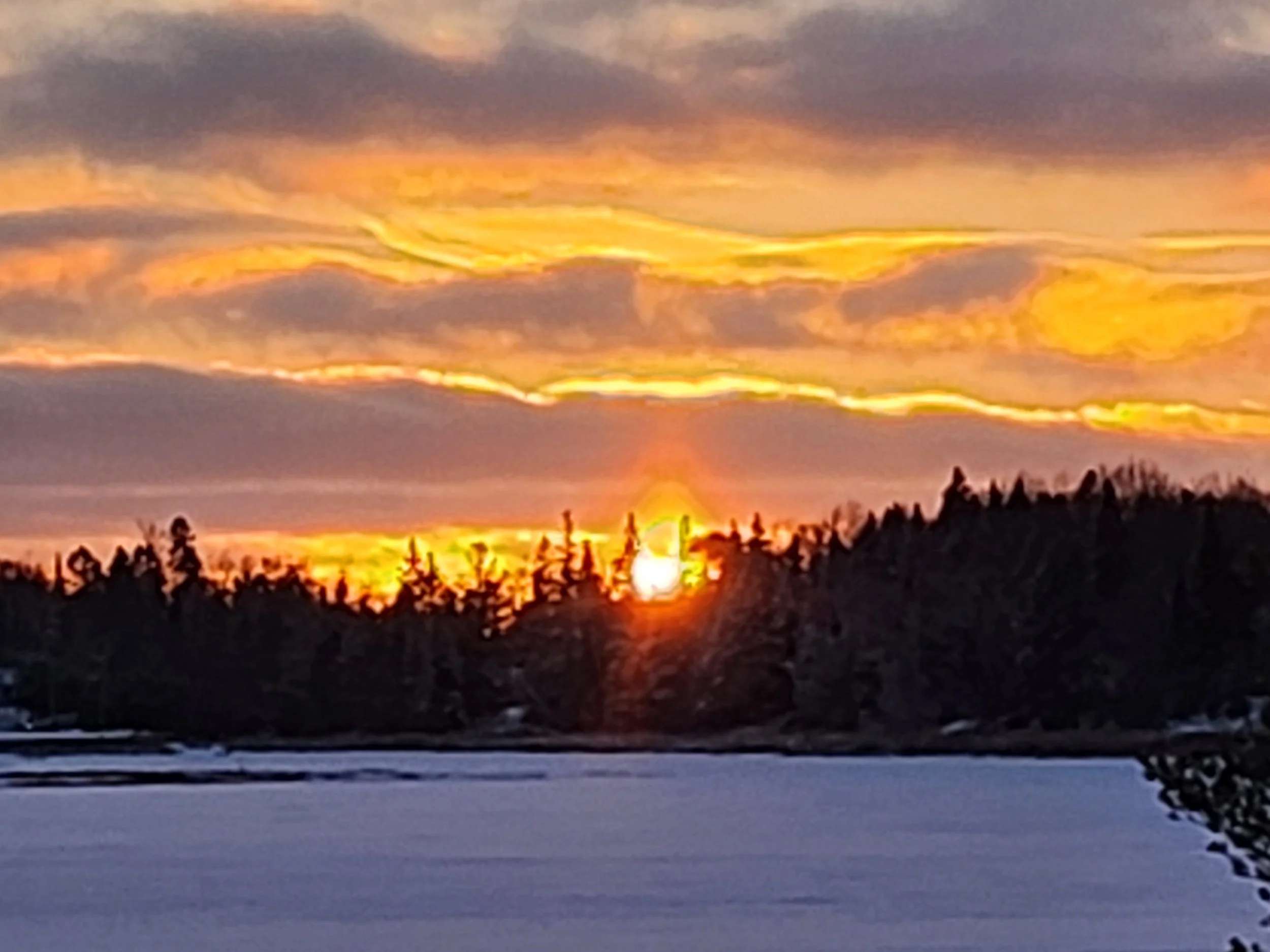
The sacred ordinary: finding divinity in lakes and stone
There are moments when the world does not arrive in thunder or revelation, but as a hush — a softness that gathers at the edges of perception. A lake before sunrise. A stone holding the warmth of the afternoon sun. The sacred rarely insists upon spectacle; more often, it lingers quietly within what we call ordinary. In my oil paintings I find that this is often the same; standing in a place and feeling the sacredness in the scene and putting paint onto canvas in hopes of capturing just that.
At the edge of a lake, I have felt the simplicity of the moment. Water meeting rock. Light dissolves into shadow. Nothing extraordinary, and yet everything is alive. In such moments, divinity does not descend from above; it rises gently from within the fabric of things — exhaled through wind, cradled in granite, trembling in reflected sky. The lake becomes a mirror not only of passing clouds, but of the vast interior sky of the soul. Colour, hue, and value speak through the paint and brush to give representation to these moments.
Stone, too, speaks in silence. Born of pressure and deep time, shaped by patience beyond imagination, it embodies a slow and faithful endurance. To cradle a stone is to touch the memory of the earth itself. It does not strive. It does not proclaim. It simply is. No matter how hard granite is, it can be cracked open by ice, frost, and water. I allow my observations of the forms that nature takes to be expressed through the palette knife and paint brush in hopes of capturing this raw and ancient power.
The sacred ordinary is not an escape from the world, but a deeper entering into it. It is the recognition that transcendence is braided into texture, temperature, and colour. When we soften our gaze, lakes become quiet altars, stones become ancient teachers, and we remember — gently — that the divine is always there. My hope is that I can express this through my oil paintings through colour, texture, and the emotions that I am feeling at the moment.